

VR/AR - part of the future of HR
Interim Search visited Warpin Media to learn more about the future of VR/AR and how it can be used for leadership development and recruitment.
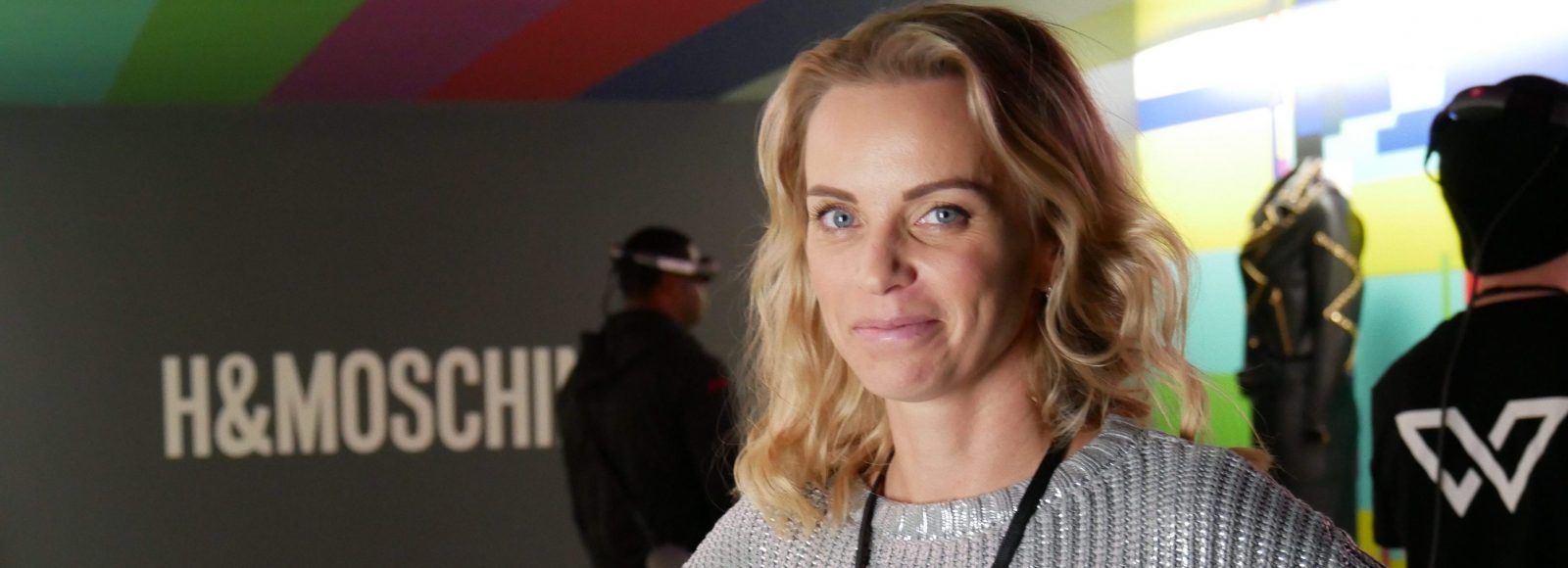
Emma Ridderstad is the founder of VR and AR agency Warpin Media AB. Founded in 2016, the company has grown from three co-founders to 14 employees in 2018. Warpin's clients include H&M, which recently collaborated with the agency to showcase its latest collection in augmented reality.
There is a difference between Virtual Reality (VR) and Augmented Reality (AR). VR means that you wear a headset to change the world completely. You can travel backwards or forwards in time and go anywhere in the world. It is essentially a filmed world where you are surrounded by the new environment in 360 degrees around you. In AR, you are in your usual environment but add a layer of digital experiences. Both VR and AR have their specific areas and do not compete with each other. VR is widely used in education, while AR is expected to become a more common feature of our everyday lives in the future.
I started Warpin Media out of pure passion, Emma says. For my own part, I was waiting for the right time. I've been watching this development for a long time, but it's been too expensive and too slow. It was only a few years ago that I realized that the tools were becoming comfortable enough. That's when I quit my job and started Warpin with two other co-founders. We started by looking at what you need as a company in a new industry and then created two different parts of Warpin - a lab where we develop our own products and another part where we work commercially with sales, customers and distribution.
”VR is an emotional medium that is deeply embedded in muscle memory and proven to deliver better results”
When it comes to the commercial side, what are you mainly doing for your customers today?
When it comes to VR, we mainly help companies train their staff. For example, training store staff in how we fold clothes and decorate a store. Instead of setting aside staff to show the same introduction every time the company gets a new employee, you can record the procedure once in VR and then reuse the material. Because VR is such an emotional medium, it is deeply embedded in muscle memory and has been proven to deliver better results for employees and companies.
AR is all about adding digital materials to the real world. A good example of this is IKEA, with AR you can use your phone to see how a piece of furniture from IKEA looks in your living room. This reduces mispurchases, returns and you can share the new furniture with other family members without the whole family having to go out to a store and see it in person.
How are VR and AR used in the workplace today and what will it look like in the future?
Most industries today use VR or AR in some way. Often, it's about showing larger investments to a smaller audience. For example, Warpin has built a 3D house for Älvsbyhus where home buyers can go in to see and feel the house before they go to the physical location and look at it. The same approach can be applied to car buying, you can view a car through your phone and see how big it is and what it looks like inside.
”I firmly believe in VR for educational purposes”
Retail chain Walmart has made it a practice to train its store staff through VR, for example, allowing staff to experience working on Black Friday through a pair of glasses. It's about saving money, streamlining processes and transferring skills in a more fun way. In the future, I think VR and AR will streamline many industries. In VR, you can visit places without physically being there, which saves resources for the companies and is good for the environment, it enables, among other things, more efficient and inspiring meetings. For example, for marketing purposes, you can imagine aid organizations taking the end consumer to the countries where members will donate money. And I'm a firm believer in VR for training purposes, preserving skills and being able to put people through onboarding sessions with material you've only had to produce once.
Recruitment seems like a good area if you think of opportunities to develop onboarding?
That's where the potential is huge. It's about taking a person who may not have been at the company before and making them comfortable in a situation before they get there. We have seen many cases where VR has been used for recruitment purposes to attract a specific target group and it is an excellent tool in the screening process to avoid misrecruitment and candidates getting the wrong picture of the company or the tasks. Being able to put a person in the expected environment early on is an advantage for both the job seeker and the employer.
”With VR, you can physically take your employees to the place where your company will be in five years”
As we talked about before, VR is an emotional medium. How can you use it as a leader in a company?
With VR, you have one hundred percent attention. That's where it differs from a traditional presentation consisting of management words to be imprinted on everyone in the company. With VR, you can physically take your employees to the place where your company will be in five years. We believe there is huge potential to use it, both in attracting, training and developing staff.
Interviewed by Natalia Ostuni Sener, Marketing Manager at Interim Search