

Olympic medalist's top tips
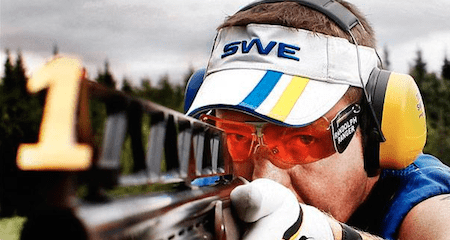
Performing when it counts is mentally demanding in both business and sport. Here and now, a chance to deliver, conditions that are more the rule than the exception when working as an interim manager. Håkan Dahlby is a current Olympic silver medalist in shooting, he has won several gold medals in the European Championships and holds the unofficial world record with 198 hits out of 200 possible. Håkan is frequently hired by boards and management teams as a trainer in mental strength and the art of performing at the top when it counts.
Why is mental training important?
The mental governs your entire day, your life, as thoughts influence emotions and your behavior that directly relate to how successful you are.
What are your top 5 tips for building mental strength?
Boost your self-confidence, learn to regulate tension, increase concentration, set goals and learn coping skills.
Actively working on your self-confidence is crucial to how well you perform when it really matters. As an individual, go back mentally to those performances where everything went your way and study what you did right. How did you prepare? What was the feeling in your body before you went on stage? Give yourself credit for your results and enjoy success, and don't punish yourself for the times when the outcome is not what you want. Instead, learn from your mistakes and move on. As a manager, remember to empower your employees by highlighting individual achievements and individuals who do something well.
And never forget that you are allowed to fail.
Learning to regulate tension is about preparing yourself, mentally and physically, so that you feel confident in what will happen when you stand on the shooting range in the Olympic final or in a final negotiation of a big deal. Your pitch should be automatic, you have prepared for objections, you feel confident in your own ability to deliver so that you are in the moment, free of tension and mental distractions that can negatively affect performance.
Working on concentration is about going in and out of focus, being in a bubble when it counts. In my case, I have such an extremely high level of concentration at the moment of shooting that I see how the clay pigeon rotates in slow motion before I fire the shot. The more you practice the situation where you only get one chance in a live situation, the more predictable the outcome becomes. In the end, it's all about a feeling, knowing and feeling that you can deliver.
Most people know that setting goals is important, but setting the right goals and in the right way is not obvious. For it to be real, the goal must be measurable and concrete, in my case to end up on the Olympic podium. To get there, you have to set measurable sub-goals, such as winning a World Cup, European Championship or World Cup, shooting a number of perfect series every training session for 6 months in a row or finding an attractive partner. You should also set daily targets such as shooting in rain, snow, wind or running 5km per day regardless of weather conditions.
When working on your goals, start from where you are now in relation to what you want to achieve, be realistic and accept yourself and your capacity.
Coping is a collective term for learning to deal with unforeseen situations and circumstances. The computer crashes before your presentation to 100 executives or the gun breaks and you have 3 minutes to fix it. For the London Olympics, I had invited 41 of my closest friends to be there to support me. The night before I got the message that the tickets were not in place and the person who would arrange it could not be reached. All my security was in place in London but it was uncertain whether they could enter the stadium. The situation was resolved hours before but without mental preparation, that coincidence would have had a direct negative impact on my performance. Be prepared, anything can happen and everything does happen, solve the problem and then focus on the task!
Which of these tips would you say has the greatest positive impact in the shortest time?
Self-confidence is everything. Work on it every day and you will soon notice a big difference in how you feel and, by extension, how you optimize your performance through increased self-confidence.
What kind of time commitment are we talking about and how do you get mental training into your daily routine?
15 minutes a day is enough, preferably in the morning or after lunch. To be truly dedicated to your goal, it should be the last thing your brain thinks about before you fall asleep and the first thing you think about because the brain processes a lot subconsciously.
In my case, I tattooed the Olympic rings on my shoulder so I was reminded of the goal when I brushed my teeth every morning & evening.
Do you work in a group or can you train on your own?
Mental training is always done individually and group training can actually have a direct negative impact because everyone is different in how they think.
How does the mental relate to the physical?
Having a good physique is very important for mental performance because it is physically exhausting to perform at your best for a long time. Your physical quality is linked to your mental quality which is linked to performance. I myself work a lot with running and spinning to be able to train shooting 5-8 hours a day before big competitions.
Is there any literature on the subject that you can recommend?
Terry Orlick's book Discover Your Ability is my little bible that I always have with me.
Any final advice?
Don't forget to have fun on the way and enjoy the journey - the road to the destination is amazing! Meeting new people, learning new things and gaining new experiences on your way to the destination. And dare to lose and you will win more in the end!