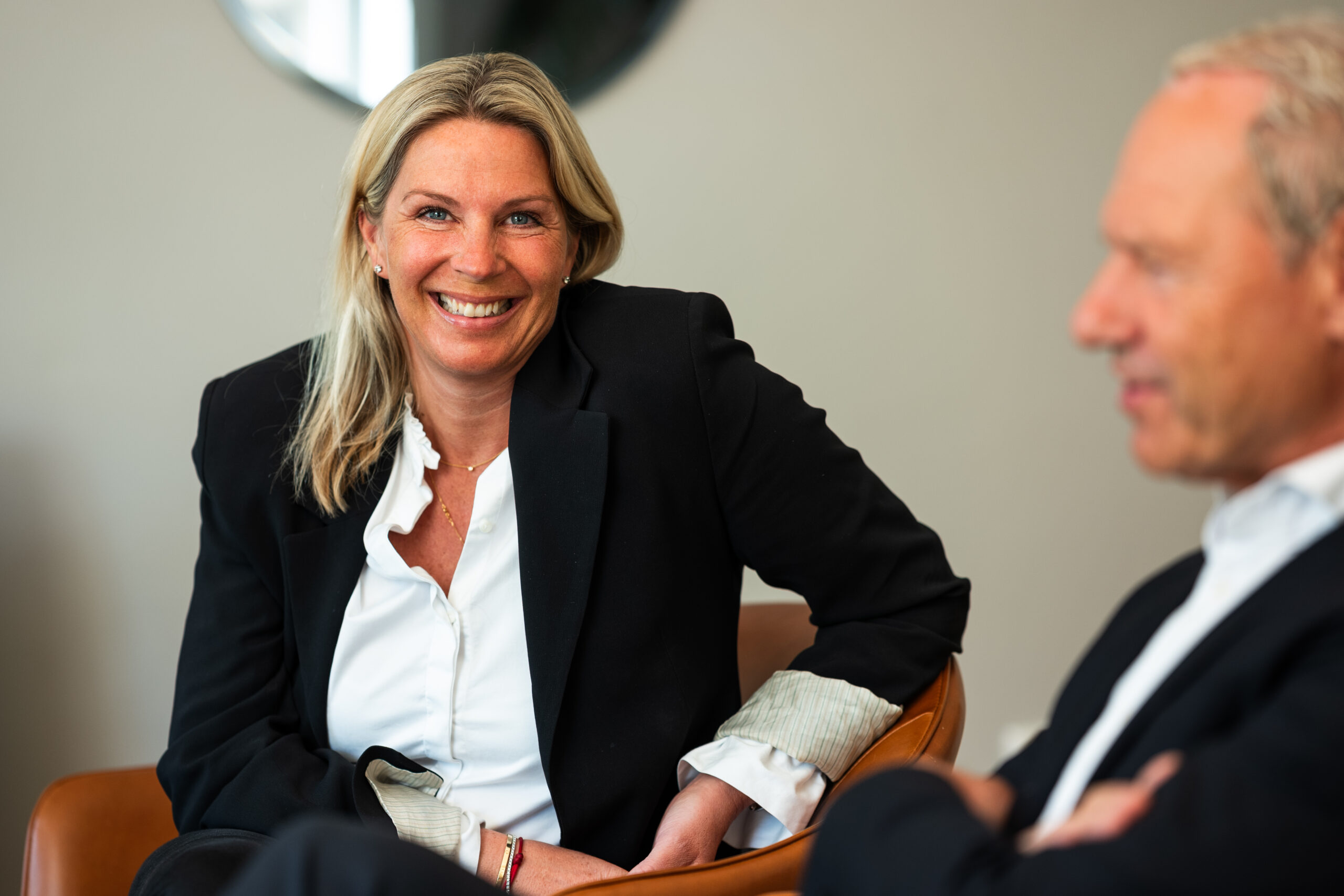


CASE STUDY: From Vulnerability to Resilience - How an Interim Security Manager Builds Long-Term Stability

In the first part of our series, we met Håkan Borgström who highlighted the need for strategic acceleration. Now we delve into the art of cleaning up complex environments and leaving behind a robust structure. We talked to Carl Magnus Rutherfalk, an expert in navigating the intersection of regulatory requirements and business logic, who recently completed a successful change management assignment with us.
The new normal requires objective glasses
The demand for interim security managers is being driven by a “perfect storm”: stricter legal requirements such as NIS2, uncertain geopolitics and an increased focus on civil preparedness. Carl Magnus sees a clear trend among Swedish companies:
- “Regulatory requirements are increasing at a rapid pace, and many organizations lack the internal experience to do the deep, strategic analysis required today. Bringing in an interim manager is about getting an objective view without internal political considerations or external sales incentives.”
The first steps: Braking to accelerate
When Carl Magnus steps into a new assignment, it is often with a specific mandate: to quickly establish control.
- “My first step is often to pause or slow down certain ongoing processes. This may sound counterproductive, but it is often necessary to avoid amplifying existing shortcomings or building in new risks. Only when the baseline and gap analysis is complete can we build a structure that actually holds up over time.”
Cleaning up supply chain and contractual structures
In his most recent assignment with us, Carl Magnus focused on creating order in an environment with unclear responsibilities. It's a challenge he sees in many places today.
- “There are often major gaps in transparency around external partners and their actual delivery. By cleaning up contractual structures and setting clearer requirements, you can stabilize finances and significantly lower risks. An external party is often better placed to make these tough but necessary decisions quickly to ensure the integrity of the business.”
Legacy: A complete management system
The aim of an interim mission is never just to put out fires; it is about building a ”one stop shop” for safety.
- “I want to leave a coherent management system where everything from incident management to supplier management and business continuity plans are connected. It creates a platform that allows the permanent organization to work proactively instead of reactively.”
Expert comment: An investment in accuracy
Lars Hygrell, Recruitment Consultant:
”Carl Magnus's recent assignment confirms that an interim Chief Security Officer acts as a strategic transformation engine. The market has realized that a permanent recruitment in an unstable phase often risks being wrong. By letting an interim profile set the structure first, the company buys itself time. You get an expert picture of what the business actually needs, which means that the subsequent permanent recruitment is much more accurate.”
Three tips for management: Before the incident happens
Carl Magnus concludes with a call to CEOs and boards:
- Trust your gut feeling: If you suspect that your security work is not up to scratch, it usually is. Don't wait for an inspection or an incident.
- Think of it as a bridge: An interim solution gives you 5-7 months to find the perfect permanent manager, while securing your business here and now.
- Select the width: Look for someone who understands both government regulations and private sector business logic.
Read also: Interim Security Manager - Strategic force in uncertain times (Part 1 with Håkan Borgström)