

Red thread: Crisis management
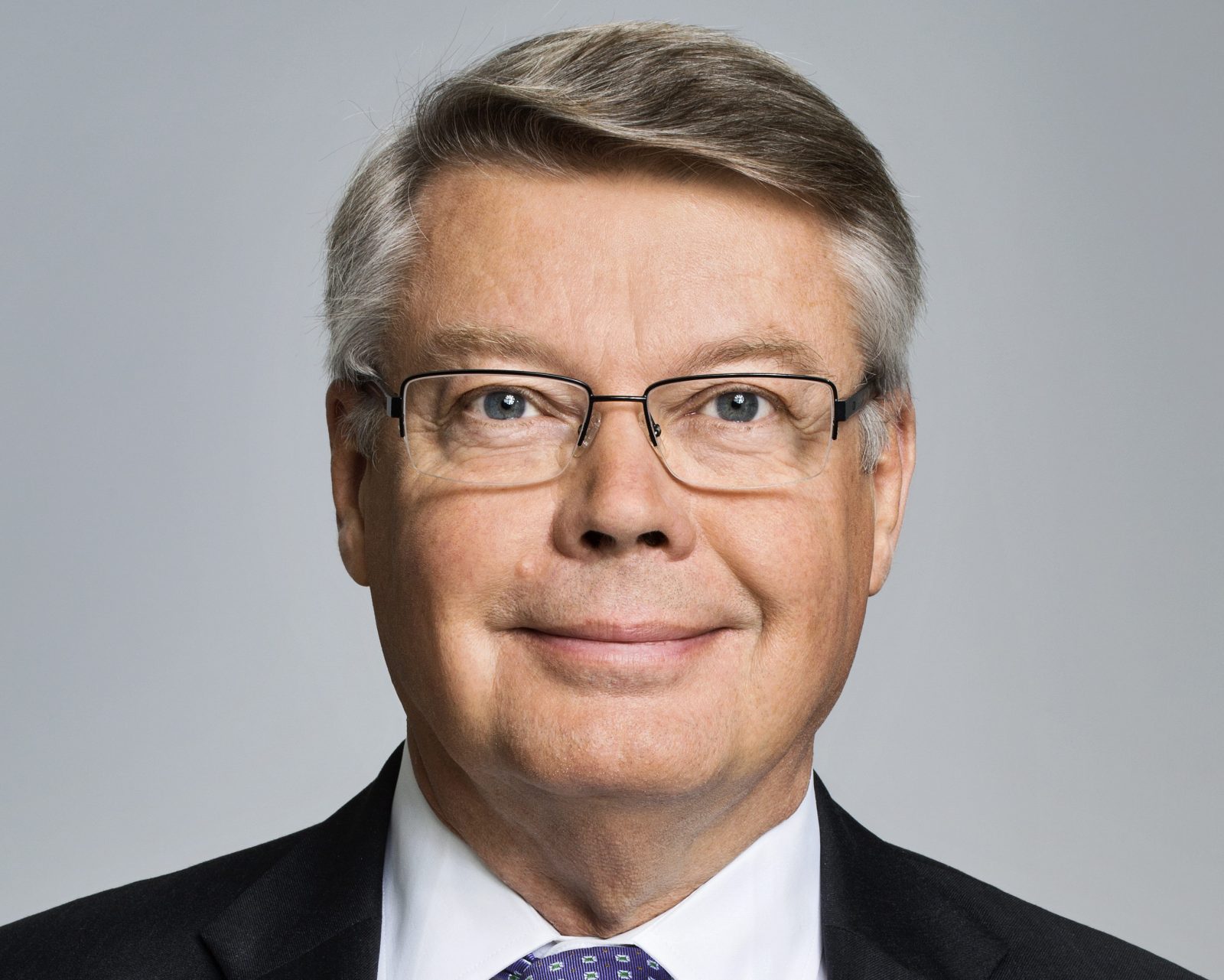
He was deeply involved in resolving the financial crisis of the 1990s and the Saab bankruptcy during his days as Governor of the Swedish National Debt Office. With a career that also includes positions as Minister of Taxation and Financial Markets and leader of the Moderate Party, he is probably one of Sweden's most experienced crisis managers. Interim Search met with Bo Lundgren to discuss risk in these times of political uncertainty, increased debt and unprecedented interest rates.
Sweden has been hit by two financial crises - in the early 1990s and in 2008/2009. When will the next one come and how should we prepare for it?
I believe that the next financial crisis, in the sense of a crisis in the financial sector, will be a long time coming. The last crisis was mainly caused by politicians and banks in other countries, but it affected the Swedish economy because, as a small open economy, we are very much affected by the world around us. The Swedish banks managed well in most cases, although Swedbank in particular was hit hard by a lack of liquidity and a crisis of confidence and therefore needed an extensive government guarantee for its funding.
The experience of the problems in the early 1990s has meant that Sweden is well equipped in terms of measures taken by the authorities and the Riksbank. Our banking sector is large, which has meant that capital adequacy rules and other requirements have been tightened and strengthened the banks. Lending is much sounder than in the late 1980s, when real estate valuations and loan-to-value ratios were unreasonable.
The major macroeconomic problem facing Sweden is the high level of private debt.
The downturn in the Swedish economy and the explosion in government debt in the early 1990s were mainly the result of a dramatic fall in domestic demand as households began to repay the loans taken out in the 1980s.
Here, policymakers need to analyze what happens to consumption when the build-up of debt reverses and savings increase. It is important to prepare measures to counteract a sharp fall in demand. We must also be careful about taking measures now that could quickly reverse the trend, such as reduced interest deductions.
Do you think we are facing a real estate crisis in the coming years? And how would a real estate crisis affect the Swedish economy today?
The real estate crisis we experienced from the late 1980s will certainly not be repeated. The high-inflation macroeconomic environment combined with the belated deregulation of the credit market in 1985 led to rampant speculation, mainly in commercial real estate. The price rise that followed was reinforced by the fact that we retained currency controls until 1989. The banks' unfamiliarity with unregulated lending naturally also contributed.
Even if real estate prices were to fall sharply in a year or two, this would not cause major problems for banks, but the adjustment of household debt would lead to a reduction in private consumption, which in turn would drag on growth. Whatever happens to real estate prices, the rise in interest rates that we hope to see in a year or so will reduce households' scope for consumption.
What can an individual company do to prepare?
Although the financial sector in Sweden is well equipped and is unlikely to be much affected by a possible fall in real estate prices and/or a rise in interest rates, a deteriorating macroeconomic situation and strained household finances will lead to more cautious lending.
It is important to have a sufficiently strong balance sheet and a good relationship with your creditors.
For a company, it is important to try to assess the extent to which it is affected by a fall in private consumption and by a rise in interest rates.
What are the political risks today?
We have a unique parliamentary situation in Sweden, with two political blocs that do not have and are unlikely to have their own majority after the next election. This makes it difficult to predict how the political environment will change. Take the debate on ”profit in welfare” as an example. It is clear that the government wants to introduce a profit ceiling of some kind, but it is very uncertain whether it can get a majority in Parliament for such a proposal. All in all, the political situation creates great uncertainty, which naturally has a negative impact on economic conditions and willingness to invest.
The large number of refugees coming to Sweden poses a major challenge. If we can manage integration well, it is likely to be an economic gain in the long term, but conversely - if we do not succeed, we face even greater exclusion with all that it entails. As I see it, the biggest challenge in maintaining confidence in Sweden and the Swedish economy in the rest of the world is to build a climate of political cooperation that is credible.
In the world around us, there are major risks of negative developments that will also affect us. These include the generally uncertain geopolitical situation in the Middle East, Asia (read North Korea) and the aggressive Russia under Putin. Add to that Brexit, which looks set to worsen the trading conditions for the UK and its trading partners, and a US election which, even if Clinton wins, looks set to lead to more protectionism.